
We spend hours tweaking slide decks, polishing feature lists, and perfecting demo flows. We rehearse our product narrative until it is seamless.
Yet, most B2B deals are not won or lost during the presentation.
In reality, buyers evaluate you long before you reach your first slide. Within the opening minutes of a discovery call, prospects run an invisible, subconscious checklist. If you fail this initial test, even the most compelling product pitch will fall on deaf ears.
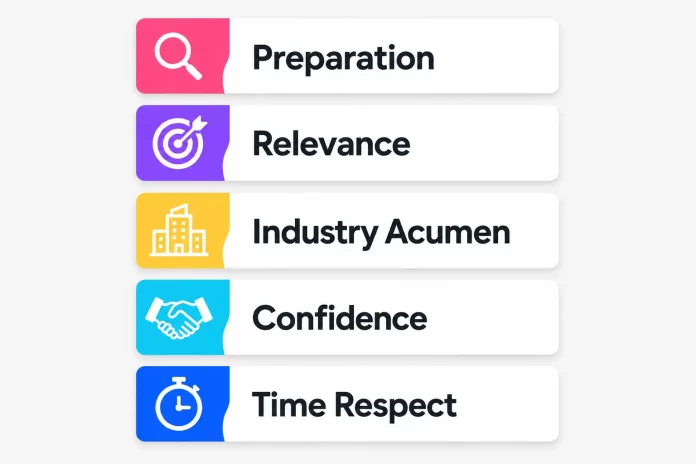
Here are the 5 critical subtle cues buyers pick up on before you even begin your pitch.
1. Your Level of Preparation
There is a vast difference between doing a quick LinkedIn search two minutes before a call and genuinely understanding a company’s operational context.
When you ask surface-level questions easily answered on their homepage, you signal that you view the meeting as a transaction rather than a partnership. Thorough, thoughtful preparation signals immediate credibility and sets a peer-to-peer tone from the start.
2. The Relevance of Your Questions
Nothing kills buyer engagement faster than a rep working through a rigid, generic qualification script.
Buyers notice instantly whether your questions are tailored to their specific business pressures or if you are simply going through the motions. Asking sharp, insightful questions proves that you care about solving their actual problems, not just hitting your quota.
3. Your Industry Understanding
Every sector has its own nuances, regulatory pressures, and market dynamics. If you rely heavily on generic sales jargon rather than the actual language of their industry, buyers will assume your solution lacks depth.
You do not need to be a veteran practitioner, but demonstrating a firm grasp of their macro environment builds instant authority.
4. Confidence Without Arrogance
There is a fine line between commercial authority and steamrolling the conversation.
Buyers respond to calm, grounded confidence, the kind that comes from knowing your value while actively listening to their needs. Arrogance manifests as over-talking, dismissing objections prematurely, or forcing a rigid agenda. True confidence creates space for a genuine dialogue.
5. Respect for Their Time
How you manage the first five minutes of a meeting sets the standard for the entire working relationship.
Punctuality, establishing a tight agenda, confirming hard stop times, and steering away from aimless small talk demonstrate operational maturity. When you show extreme respect for a buyer’s calendar, they trust you to respect their time throughout the rest of the sales cycle.
The Takeaway
Winning deals is rarely about having the flashiest demo. It is about how seamlessly you conduct yourself before the pitch even starts. By mastering these five subtle cues, you build the trust required to transform a standard sales pitch into a collaborative commercial conversation.