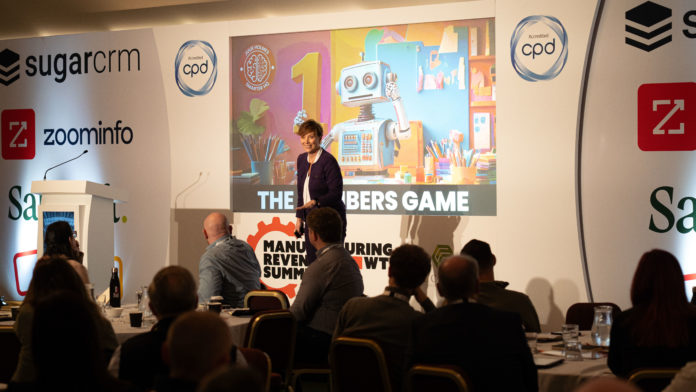
If you think the secret to 2026 success is simply handing out ChatGPT logins or rolling out Microsoft Co-pilot, Julie Holmes has a reality check for you.
“Giving technology without a framework is one of the worst things you can do for your organisation,” Julie warned the summit audience. To many, AI still feels like a group of “busy elves” behind the scenes writing content. However, the reality is far more complex.
Instead of magic, Julie argues that success requires a strategic, human-centric architecture.
The Strategic AI Roadmap
Julie identifies a clear path for organisations looking to move beyond the hype. Notably, it begins with understanding potential, not just tools.
Understand the Potential: Know what is actually possible so you know what is worth pursuing.
Prioritise the Opportunities: AI can do everything, but it shouldn’t. Consequently, you must identify which investments will actually move the needle.
AI-First Strategy: Don’t just use AI to write the same old emails faster. Rather, rethink your entire outreach strategy from the ground up.
The Decline of Soft Skills
Perhaps the most surprising part of Julie’s talk was her focus on the “human” element. Specifically, she highlighted a 20-year decline in critical thinking, problem-solving, and communication skills.
Ironically, these are the exact skills required to use AI effectively. “Does anybody find there might be a lack of common sense in your organization right now?” she joked with the audience. Because AI can hallucinate or provide biased data, the ability to discern right from wrong has become a premium professional skill.
Reinforcing the “Human” AI Skillset
To truly “embed and embrace” AI, Julie argues that we must reinforce the following:
Ethical Discernment: Understanding the implications of AI-generated output.
Research Literacy: Knowing how to verify if information is actually true.
Effective Communication: Learning how to “talk” to AI to get the best results.
Ultimately, AI isn’t replacing the need for intelligence; it is raising the bar for it. Therefore, the most successful manufacturers in 2026 won’t just have the best software—they will have the most critically-minded people.
Check out our other From the NSC Stage articles, including:
The ‘Invisible Sale’: 3 Lessons from Simon Hazeldine
Ben Hanlin: The Psychology Of Sales Audience Engagement
Andy Bounds: Why Your Prospects Don’t Care About Your History