For years, the “Short-Run” book market was a logistical headache. Printers often had to outsource complex binding. Alternatively, invest in massive, industrial manufacturing print machinery that sat idle for half the week.
But, now there is a new exclusive partnership between Friedheim International and Digibook Technology Sagl. One that is designed to signal a major shift toward decentralised manufacturing.
The “Mid-Market” Manufacturing Print Solution
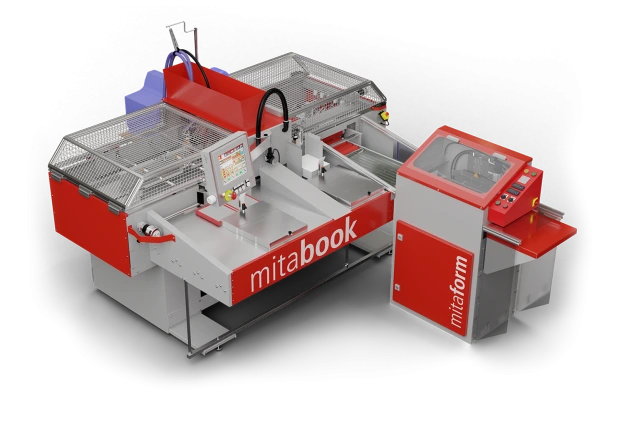
Digibook’s technology is designed to close the gap between semi-automatic and high-volume industrial systems. So, for SMEs and scale-ups, this represents a low-friction entry point into the book-on-demand market.
Key Performance Advantages
Automation for Non-Specialists: The machinery is designed for “automation and ease of use.” Therefore, it means firms don’t need to hire rare (and expensive) binding specialists.
Rapid Changeovers: Reduced downtime and waste are the secret weapons against margin erosion in short-run production.
Vertical Integration: By bringing the entire 360° manufacturing process in-house, printers can capture the margins they previously handed to third-party finishers. This includes the whole process, from perfect binding to case making.
Every Print Manufacturing phase under one roof
These capabilities align with the broader market trend toward increased automation, flexible run lengths and efficient digital finishing.
“We are thrilled to represent the Digibook range exclusively in the UK,” said Howard Cherry National Sales Manager for Finishing Solutions at Friedheim International. “This partnership reinforces our commitment to equipping printers with best-in-class technologies that enable profitable short-run and book-on-demand production.”
“Together, we can help UK print businesses capture new markets by bringing premium book production in-house,” added Seth Morgan, Marketing Executive at Friedheim.
In 2026, growth comes from eliminating external dependencies. If you can perform all phases of manufacturing under one roof, you don’t just save on logistics; you gain total control over the customer experience.