From The NSC Stage 🎤 | Ben Hanlin: The Psychology Of Sales Audience Engagement

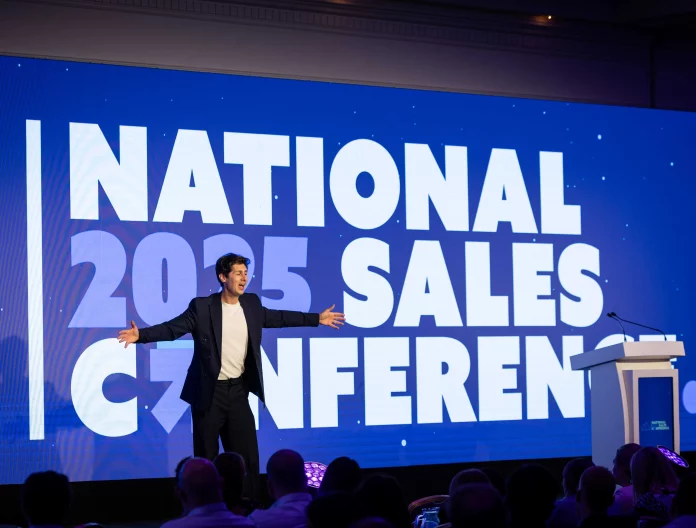
At the National Sales Conference, Ben Hanlin didn’t just perform a miracle; he performed a “sales audit” on his own opening 3 minutes and 26 seconds. Ben argues that while only 20% of his job is the “performance,” the remaining 80% is exactly the same as yours: sales, marketing, and the relentless pursuit of sales audience engagement.

The “Show, Don’t Tell” Strategy

Early in his career, Ben wanted his own TV show. The gatekeepers: the TV commissioners—said “no” because he had no brand recognition. Instead of giving up, he pivoted his approach from telling them he was good to showing them his value. He created his own low-budget “pilot” on YouTube, filmed himself doing magic for celebrities such as Michael McIntyre, and sent the evidence to managers.

By the time he sat in the boardroom, he wasn’t asking for a chance; he was presenting a proven concept. In sales, we often get caught in the trap of “telling” a prospect we are the best. Ben’s approach suggests that if your prospect can’t see your vision, you should stop talking. Use a high-impact case study, a live demo, or a pilot programme to make your value undeniable before you even ask for the business.

The 5 “Tricks” for Instant Rapport

Ben breaks down the five specific actions he takes every time he steps on stage to connect with a room of strangers—tactics that are directly transferable to your next discovery call or board presentation.

Positive Body Language (The 7-Second Rule): First impressions are formed in seven seconds. Before you speak, use eye contact, open palms, and a genuine smile to prove you are confident, competent, and non-threatening.

“In the first seven seconds, I’m not saying anything. I’m just looking at you. I’m proving that I am confident and that I want to be here. If you don’t win the room before you open your mouth, you’ve already lost.”

Ben Hanlin, at the National Sales Conference 2025

Engagement Over Small Talk: Mundane questions like “How’s your week?” invite the brain to “switch off.” Ben suggests asking questions that force the prospect to engage their memory or emotions, such as “What’s been the highlight of your month?” or “What’s the one problem you’d pay to have gone by Friday?”

The Undivided Attention Tax: In a world of virtual meetings and “corners of death” (phone notifications), being 100% present is your greatest competitive advantage. If a prospect doesn’t feel seen, they won’t feel valued.

The “Use it or Lose it” Name Tool: Hearing our own name triggers a unique neurological response. To lock a name into your memory and build a bridge of familiarity, Ben recommends using a person’s name two to five times within the first sixty seconds of meeting them.

Radiators vs. Drains: In every interaction, you are either a “radiator” (someone who gives off energy and warmth) or a “drain” (someone who saps it). Even if your journey to the meeting was a nightmare, Ben stresses the importance of reframing your opening interaction to remain 100% positive. People buy from radiators.

The “Persistence” Playbook

Ben’s story of getting onto Dancing on Ice is a masterclass in modern prospecting. After being told “no” for three years, he didn’t just wait; he sent a video of himself ice skating to the producers every single week for six months. He didn’t ask for permission; he provided proof of progress.

“Persistence is not just showing up; it’s showing up with something new to say. I didn’t send them an email saying ‘Have you watched my video yet?’ I sent them a new video every week showing I was better than the week before.”

Ben Hanlin, at the National Sales Conference 2025

This is the ultimate lesson in sales audience engagement: persistence is a demonstration of growth, not just a repetitive check-in.

Check out our first From the NSC Stage article, featuring The ‘Invisible Sale’: 3 Lessons from Simon Hazeldine.


RECOMMENDED FOR YOU

Elevate Your Sales: The National Sales Conference 2025 Lineup is Here

The National Sales Conference is returning to Birmingham's National Motorcycle Museum on 13 November, promising to be the most comprehensive sales event of the...

Wayve & Uber Secure TfL Licence for London Autonomous Rides

Transport for London (TfL) has now granted Private Hire Vehicle licences to Wayve’s all-electric Ford Mustang Mach-E fleet. As a result, this landmark step brings Wayve and partner Uber much closer to offering commercial autonomous rides across London. In addition, the licensing completes the UK's strict "triple-lock" requirement. Therefore, the operator, driver, and vehicle now all hold matching credentials under the same licensing authority. The vehicles use the Wayve AI Driver alongside cameras and radar, while being supervised by a licensed safety driver. Furthermore, public interest in the technology is growing rapidly. For example, over 100,000 Londoners joined Uber’s Interest List in just eight weeks. Consequently, select riders will take early trips this summer to fine-tune the service before full public launch. The Homegrown AI Revolution: From Lab to Scale Wayve offers a clear case study in commercialising fundamental UK university research. Alex Kendall and Amar Shah founded the company in 2017 out of Cambridge University. However, they quickly set out to break away from traditional self-driving paradigms. Legacy autonomous systems rely heavily on expensive HD maps and rigid rules. In contrast, Wayve pioneered an "AI-first" approach known as AV2.0. Because of this, their AI Driver learns to navigate complex urban streets much like a human driver. Similarly, the system continuously adapts to new vehicle types and changing weather conditions. Having been tested on London streets since 2018, Wayve has subsequently demonstrated driving intelligence across 500 cities worldwide. Sarah Gates, VP Global Affairs & Assurance, said: “This licence is an important step towards giving Londoners the chance to experience autonomous driving technology. The responsible deployment of these vehicles will bring us safer, cleaner and quieter streets, and we’re proud to continue working alongside regulators, communities, and the public as we take the next steps towards making autonomous rides a reality in the capital.” Annie Duvnjak, Global Head of Autonomous Mobility Operations, Uber added: "This licence is a key milestone in bringing autonomous rides to London on Uber. Our interest list has seen an incredible response from Londoners who are excited to experience Wayve’s British-built autonomous driving technology." Commercial Takeaways for The Growth Hub Community Wayve’s success offers valuable lessons for UK firms commercialising high-value R&D: Hardware and Component Opportunities: First, AV2.0 moves autonomous technology directly onto standard production-line vehicles. Consequently, component manufacturers, camera suppliers, and radar specialists have a clear opening to supply automotive-grade hardware. Generalisable Software Drives Scale: Second, Wayve scales rapidly without needing to map every individual street. Therefore, business leaders should evaluate whether their own software architectures rely too heavily on rigid rules. Go-to-Market Alliances Accelerate Growth: Finally, Wayve partnered directly with Uber instead of building a standalone consumer network. Combining novel IP with established commercial channels ultimately speeds up regulatory trust and market access.

Salesforce Launches Agentforce Commerce to Reframe AI Retail

Discover Salesforce’s biggest tech launch in years: Agentforce Commerce. Read how autonomous AI agents are connecting B2C shoppers, B2B procurement, and merchants.
- Advertisment -

FEATURED

AI Job Loss Survey: Half of UK Workers Fear Automation

A major GMB Union AI job loss survey of 5,000 workers shows 48% fear automation as recent job cuts at Asda and Nestlé fuel intense workplace worry.