
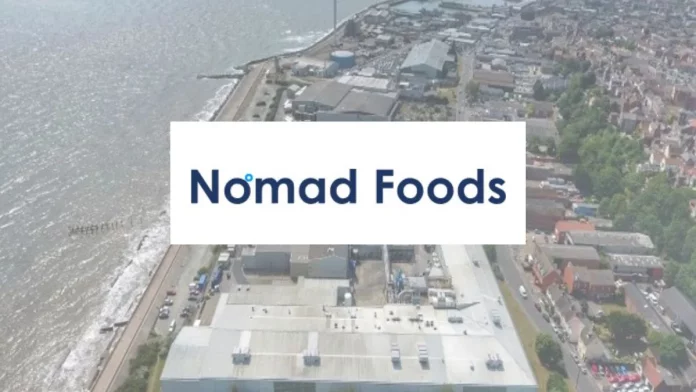
The European frozen food market is experiencing a massive surge in demand for affordable household staples. Consequently, major food producers are scaling up their automated processing lines to protect their margins against fluctuating ingredient costs.
In a major boost for the UK’s agricultural processing sector, Nomad Foods (NYSE: NOMD) has announced a £2.2 million investment to install a new, high-speed potato waffle production line at its historic factory in Lowestoft, Suffolk.
This capital injection serves as a key pillar in the company’s broader, long-term productivity program announced last year. Reflecting the core automated manufacturing principles debated recently at Smart Manufacturing Week in Birmingham, the new infrastructure is designed to solve a significant commercial problem: keeping up with a 24/7 production schedule while maintaining a highly resilient supply chain.
Scaling Up Volume for High-Demand Staples
Nomad Foods is Europe’s leading frozen food company, owning household brands such as Birds Eye, Findus, Iglo, Ledo, and Frikom. Specifically, the Lowestoft facility is a massive 25-acre asset that has been operating since 1949 and serves as the town’s largest private-sector employer.
The new capital investment targets a major capacity bottleneck. By introducing advanced, automated line technology, the facility will increase its annual potato waffle capacity to approximately 18,250 tonnes.
This output is the equivalent of nearly 45 million individual potato waffles per year. Importantly, this automated upgrade allows Nomad Foods to respond directly to steady retail demand while ensuring consistent product placement across major UK supermarkets.
Maximising Factory Efficiency and Energy Resilience
For mid-sized and enterprise food manufacturers alike, true growth is not just about producing more items. Instead, it requires driving down the operational cost per unit through smart infrastructure upgrades.
The new waffle line forms part of a sustained, phased modernisation program at the Lowestoft site.
Furthermore, the business recently completed a £12 million outlay to modernise its chicken processing operations on the same site. To insulate the factory floor from volatile wholesale energy costs, Nomad Foods is also moving forward with plans for an on-site wind turbine.
As a direct result, the facility will combine its existing green electricity contracts with sovereign, on-site renewable energy generation. This ensures that the high-volume, 24/7 manufacturing lines run on highly predictable, long-term cost structures.
Securing a Sovereign European Supply Network
Operating as a long-established cornerstone of large-scale British food manufacturing, the Lowestoft factory plays an increasingly vital role in international trade logistics. Rather than serving purely as a domestic supplier, the facility functions as a key node in the broader European food grid.
Clearly, the efficiency gains achieved on the factory floor have turned the site into an export powerhouse. Approximately 15% of all production from Lowestoft is now exported directly to meet increasing consumer demand across continental European markets.
“This latest investment at our Lowestoft site is testament to our long-term commitment to UK food manufacturing,” stated Eduardo Bachiega, Chief Supply Officer at Nomad Foods. “At a time of increasing pressure on global food systems, as well as ongoing cost-of-living challenges for consumers, we continue to invest in our operations ensuring key frozen food categories such as fish, vegetables, chicken and potatoes remain an accessible food choice for families across the UK and Europe.”
The Bottom Line for Industry Operators
The Nomad Foods expansion offers a clear lesson for automated operations. Therefore, when consumer wallets are stretched by cost-of-living challenges, businesses win by scaling the production of entry-level, high-volume products.
Indeed, real growth does not come from chasing niche, high-margin items. Instead, it comes from using automation, green energy integration, and layout optimisation to manufacture high-demand staples at an unbeatable operational efficiency.