
Business Productivity Lessons from the NAO & ICAEW

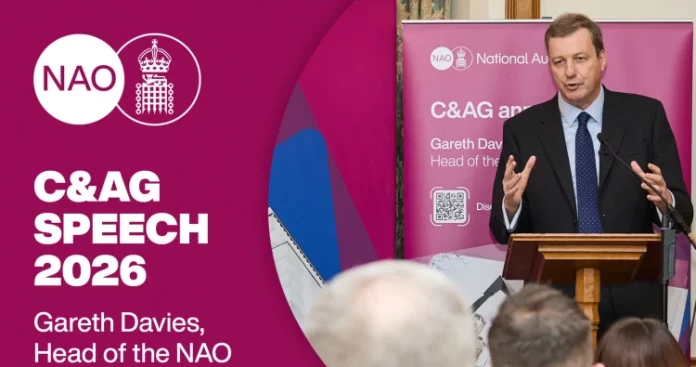
Gareth Davies, head of the National Audit Office (NAO), has issued a warning. A warning that resonates beyond the public sector. Specifically: Too many services remain difficult to use and expensive to deliver. Geopolitical tensions and demand pressures are rising. But, Davies’ roadmap for “Trust, Value, and Impact” provides a masterclass in how any organisation can reclaim its business productivity edge in 2026.

This call for a “step change” in financial management is echoed by the Institute of Chartered Accountants in England and Wales (ICAEW). The institute has long championed the role of professional accountants in tackling issues ranging from public debt to the effective management of the public balance sheet.

Kill the ‘Archivist’ Mentality

Davies identifies a critical weakness. Managers often lack “activity cost information” to drive efficiency. That is because systems are set up to control budgets rather than help people manage. This is a challenge the ICAEW identified more than a decade ago in its A CFO at the Cabinet Table report. The report notes that a focus on spending limits creates a genuine “disincentive to proactively manage costs.”

The Growth Hub Take: If you are only looking at your top-level P&L to stay within budget, you aren’t managing growth. Instead, you’re just archiving history. The goal should be better outcomes for customers, not just balancing the books.

The ‘Iron Man’ Approach to AI

The NAO is taking a “pro-innovation” approach to AI. Therefore, it highlighted cases where AI-enabled tools saved the police 11,000 days a month. It was achievd by automating video redaction. However, Davies warns that accuracy risks must be managed to secure public trust.

The Growth Hub Take: Success in 2026 isn’t about replacing humans with robots; it’s about “Iron Man” augmentation. Use AI for the high-volume “heavy lifting,” but keep your experts in the loop to provide the nuance and conviction that algorithms cannot.

Bridge the ‘Capability Gap’

Davies emphasises that efficiency won’t come from simple “headcount” shifts, but from a surge in specialist skills. Henning Diederichs, Senior Technical Manager at ICAEW, agrees. He says that the public sector needs the “skills and capability needed to support effective financial decision-making.”

The Growth Hub Take: You cannot cut your way to growth. Instead, true operational resilience requires a workforce that views financial information as a tool for performance, not just a compliance checkbox.

Stop ‘Cost Shifting’ and Look at the Whole System

A recurring failure identified by the NAO is the “transfer of cost to another part of the system with no benefit to the taxpayer”. The ICAEW suggests the UK needs a more holistic approach that takes a long-term view of resource allocation rather than reactive, short-term budget fixes.

The Growth Hub Take: This is a trap many scaling businesses fall into. Siloed “efficiency” in sales that creates a bottleneck in operations isn’t a win. It’s a shell game. To grow in 2026, you must analyse the end-to-end journey to ensure one department’s “saving” isn’t another’s “cost”.

The Bottom Line

“Financial management is not just about compliance. It’s how better results are delivered,” says Davies. In an era of chronic under-investment and high volatility, the leaders who win will be those who move from simple budget-balancing to a “culture of continuous improvement.”


RECOMMENDED FOR YOU

Tech Milestone: VodafoneThree and Ericsson Relaunch UK 5G

VodafoneThree, Ericsson complete a historic national network upgrade, eliminating 16,500km² of black spots and bringing fast 5G to 50M people.

Selling to different roles: Why build personas?

When there are different job roles within a company to sell to, it’s important to understand each one and the best ways to convert...

Wayve & Uber Secure TfL Licence for London Autonomous Rides

Transport for London (TfL) has now granted Private Hire Vehicle licences to Wayve’s all-electric Ford Mustang Mach-E fleet. As a result, this landmark step brings Wayve and partner Uber much closer to offering commercial autonomous rides across London. In addition, the licensing completes the UK's strict "triple-lock" requirement. Therefore, the operator, driver, and vehicle now all hold matching credentials under the same licensing authority. The vehicles use the Wayve AI Driver alongside cameras and radar, while being supervised by a licensed safety driver. Furthermore, public interest in the technology is growing rapidly. For example, over 100,000 Londoners joined Uber’s Interest List in just eight weeks. Consequently, select riders will take early trips this summer to fine-tune the service before full public launch. The Homegrown AI Revolution: From Lab to Scale Wayve offers a clear case study in commercialising fundamental UK university research. Alex Kendall and Amar Shah founded the company in 2017 out of Cambridge University. However, they quickly set out to break away from traditional self-driving paradigms. Legacy autonomous systems rely heavily on expensive HD maps and rigid rules. In contrast, Wayve pioneered an "AI-first" approach known as AV2.0. Because of this, their AI Driver learns to navigate complex urban streets much like a human driver. Similarly, the system continuously adapts to new vehicle types and changing weather conditions. Having been tested on London streets since 2018, Wayve has subsequently demonstrated driving intelligence across 500 cities worldwide. Sarah Gates, VP Global Affairs & Assurance, said: “This licence is an important step towards giving Londoners the chance to experience autonomous driving technology. The responsible deployment of these vehicles will bring us safer, cleaner and quieter streets, and we’re proud to continue working alongside regulators, communities, and the public as we take the next steps towards making autonomous rides a reality in the capital.” Annie Duvnjak, Global Head of Autonomous Mobility Operations, Uber added: "This licence is a key milestone in bringing autonomous rides to London on Uber. Our interest list has seen an incredible response from Londoners who are excited to experience Wayve’s British-built autonomous driving technology." Commercial Takeaways for The Growth Hub Community Wayve’s success offers valuable lessons for UK firms commercialising high-value R&D: Hardware and Component Opportunities: First, AV2.0 moves autonomous technology directly onto standard production-line vehicles. Consequently, component manufacturers, camera suppliers, and radar specialists have a clear opening to supply automotive-grade hardware. Generalisable Software Drives Scale: Second, Wayve scales rapidly without needing to map every individual street. Therefore, business leaders should evaluate whether their own software architectures rely too heavily on rigid rules. Go-to-Market Alliances Accelerate Growth: Finally, Wayve partnered directly with Uber instead of building a standalone consumer network. Combining novel IP with established commercial channels ultimately speeds up regulatory trust and market access.
- Advertisment -

FEATURED

Sarah Fox – How Contracts Drive Trust and Retain Customers (3/5)

Fair and transparent contract terms aren’t just legal necessities—they’re powerful tools for building trust, strengthening relationships, and driving customer loyalty. In this third episode of...