
Mapei UK Invests £40M in New Burnley Production Hub

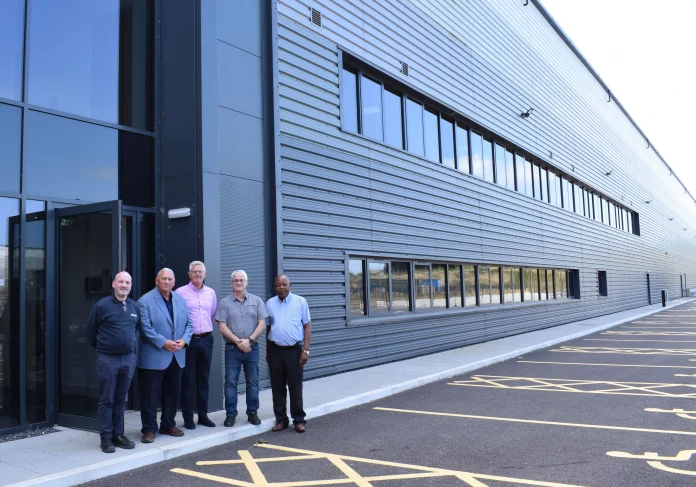
Construction chemical manufacturer Mapei UK has announced a landmark £40 million investment in its British manufacturing infrastructure. Specifically, the firm has acquired a new production and distribution facility at Frontier Park in Burnley.

Located right off Junction 9 of the M65, the consolidated site will replace Mapei’s two existing Burnley locations. By bringing manufacturing, technical services, warehousing, and offices under one roof, the operational shift aims to streamline logistics and boost overall efficiency.

Expanding UK Manufacturing and Operational Capacity

The expanded site provides over 15,000 m² of dedicated warehouse capacity. In addition, it features a specialized 1,066 m² technical training laboratory and academy.

Furthermore, Frontier Park will serve as the operational epicenter for Mapei UK’s construction division. The site includes extruded membrane manufacturing alongside brand-new powder plant technology. As a result, this state-of-the-art setup increases production capacity to support continuous future expansion.

Shortening Supply Chains and Driving Domestic Growth

Beyond increasing volume, the site allows Mapei UK to onshore the production of select product lines currently imported from mainland Europe. Transitioning these lines to domestic manufacturing aligns directly with wider UK commercial priorities, reducing customer lead times, improving product availability, and supporting lower scope 3 supply chain emissions.

“The new Burnley facility represents another significant investment in the UK market and underlines our long-term commitment to British manufacturing,” stated Phil Breakspear, Managing Director at Mapei UK. “This new site is a platform for future growth, increasing our production capabilities and ensuring we continue to provide the high levels of quality, innovation, and customer service that Mapei UK is renowned for.”

By consolidating facilities into a single hub, Mapei UK strengthens its domestic supply chain footprint while laying the foundation for sustainable commercial expansion.


RECOMMENDED FOR YOU

Nominate Your Sales Star!

According to leading reward and benefits platform Perkbox, employee recognition is more important than ever, especially within the sales profession. Recognising hard work and...

7 Steps to Boost End-of-Year Sales Performance

As we approach the end of the year, businesses are grappling with tightened budgets and limited resources, which has taken a toll on sales...

Wayve & Uber Secure TfL Licence for London Autonomous Rides

Transport for London (TfL) has now granted Private Hire Vehicle licences to Wayve’s all-electric Ford Mustang Mach-E fleet. As a result, this landmark step brings Wayve and partner Uber much closer to offering commercial autonomous rides across London. In addition, the licensing completes the UK's strict "triple-lock" requirement. Therefore, the operator, driver, and vehicle now all hold matching credentials under the same licensing authority. The vehicles use the Wayve AI Driver alongside cameras and radar, while being supervised by a licensed safety driver. Furthermore, public interest in the technology is growing rapidly. For example, over 100,000 Londoners joined Uber’s Interest List in just eight weeks. Consequently, select riders will take early trips this summer to fine-tune the service before full public launch. The Homegrown AI Revolution: From Lab to Scale Wayve offers a clear case study in commercialising fundamental UK university research. Alex Kendall and Amar Shah founded the company in 2017 out of Cambridge University. However, they quickly set out to break away from traditional self-driving paradigms. Legacy autonomous systems rely heavily on expensive HD maps and rigid rules. In contrast, Wayve pioneered an "AI-first" approach known as AV2.0. Because of this, their AI Driver learns to navigate complex urban streets much like a human driver. Similarly, the system continuously adapts to new vehicle types and changing weather conditions. Having been tested on London streets since 2018, Wayve has subsequently demonstrated driving intelligence across 500 cities worldwide. Sarah Gates, VP Global Affairs & Assurance, said: “This licence is an important step towards giving Londoners the chance to experience autonomous driving technology. The responsible deployment of these vehicles will bring us safer, cleaner and quieter streets, and we’re proud to continue working alongside regulators, communities, and the public as we take the next steps towards making autonomous rides a reality in the capital.” Annie Duvnjak, Global Head of Autonomous Mobility Operations, Uber added: "This licence is a key milestone in bringing autonomous rides to London on Uber. Our interest list has seen an incredible response from Londoners who are excited to experience Wayve’s British-built autonomous driving technology." Commercial Takeaways for The Growth Hub Community Wayve’s success offers valuable lessons for UK firms commercialising high-value R&D: Hardware and Component Opportunities: First, AV2.0 moves autonomous technology directly onto standard production-line vehicles. Consequently, component manufacturers, camera suppliers, and radar specialists have a clear opening to supply automotive-grade hardware. Generalisable Software Drives Scale: Second, Wayve scales rapidly without needing to map every individual street. Therefore, business leaders should evaluate whether their own software architectures rely too heavily on rigid rules. Go-to-Market Alliances Accelerate Growth: Finally, Wayve partnered directly with Uber instead of building a standalone consumer network. Combining novel IP with established commercial channels ultimately speeds up regulatory trust and market access.
- Advertisment -

FEATURED

📑 Sales Autopsy: Why This £2m Chemical Deal Hit the “Savings Wall”

Why do deals fail when the budget is there? Explore this sales autopsy on a major UK chemicals integration and the impact of workplace silence.