
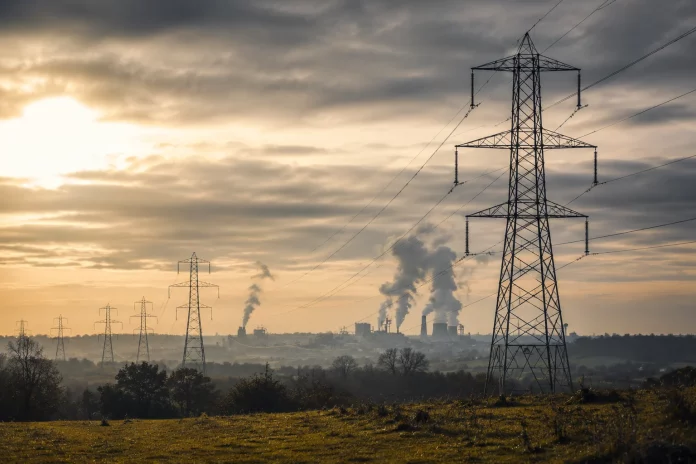
High industrial electricity costs are pushing UK manufacturing to a tipping point. They threaten factory closures and a catastrophic loss of up to £85bn in economic output. Therefore, the government must take immediate intervention.
A landmark joint report by Make UK and Ecotricity Business highlights this danger. The report, titled From Crisis to Stability: A Future Energy System for Manufacturers, warns that the sector faces severe international uncompetitiveness. Recent Middle East conflicts have driven wholesale prices up sharply. Consequently, Brent crude surpassed $120 a barrel, and UK wholesale gas hit 172p a therm. Furthermore, the UK still uses an outdated marginal pricing system. Because of this, expensive gas-fired generation set the wholesale power price roughly 90% of the time in 2025. This means British industry remains completely exposed to volatile fossil fuel markets, despite rising renewable capacity.
The domestic impact is already visible across the country. In fact, 90% of manufacturers have seen their energy bills rise significantly or moderately since 2022. In addition, energy-intensive industrial output has plummeted by a third since 2021. A further 13% of manufacturers state that projected price shocks could prove terminal to their operations. As a result, these shocks risk severe deindustrialisation and could wipe billions from local supply chains.
How is the UK Manufacturing Industry Adapting?
Despite a challenging business environment, manufacturers remain heavily committed to net zero. Indeed, 71% classify it as important to their business operations. To survive the crisis, companies are aggressively pursuing three core strategies:
Energy Efficiency: To begin with, 89% of manufacturers have adopted strategic efficiency practices. For example, Derbyshire fashion firm David Nieper has slashed its factory carbon emissions by 44% since 2020. They invested in modular boilers, heat pumps, and low-energy sewing motors. Consequently, they cut the power required per garment by 37.5%.
Electrification: Similarly, 63% of firms have taken steps toward industrial fuel switching. Moreover, 87% are eager to invest more if the “spark gap” between gas and electricity prices narrows. Schneider Electric’s new £42m smart plant in Scarborough showcases this potential. The site operates with net-zero Scope 1 and 2 emissions through full process electrification.
On-Site Renewables: Additionally, businesses are installing solar arrays and wind turbines to establish energy independence. Numatic recently invested £1.5m in a 2,672-panel solar farm at their Chard factory. This investment saves them £300,000 annually. It also allows the site to run completely off-grid during peak daylight hours.

However, wide-scale rollout remains severely constrained. Manufacturers cite the high upfront cost of capital (53%) as a major barrier. They also point to uncompetitive operational costs (32%) and substantial grid connectivity barriers.
The Blueprint for Reform
The report details a comprehensive, two-pronged approach for the incoming government. This plan aims to stabilise the sector and spark a green industrial revolution.
Immediate Price Relief and Investment Incentives
Rebalance Policy Costs: Currently, the UK loads green and social levies directly onto electricity bills. This practice disincentivises electrification. Moving these costs into general taxation would provide immediate relief. Germany successfully implemented this model in 2022. Furthermore, modelling shows that every £10/MWh reduction in energy bills boosts the UK economy by £800m per year.
Expand the British Industrial Competitiveness Scheme (BICS): While BICS provides up to 25% relief, it currently only covers 1 in 10 manufacturers. Therefore, the government must extend it to cover all 130,000 UK manufacturers to prevent widespread industrial decline.
Business Rate Relief: The current business rates system penalises companies for green upgrades. It does this by raising the rateable value of the property. Extending Green Investment Relief from 12 months to three years would unlock substantial private investment.
Long-Term Structural Overhaul
Break the Link: The report strongly advocates shifting from the current “pay-as-clear” wholesale market to a “pay-as-bid” system. Instead of paying the highest marginal rate (usually gas), the system would pay generators their actual bid price. Consequently, the UK can finally pass the cost benefits of cheap, homegrown wind and solar power directly to businesses. Ecotricity’s data suggests that breaking this link would have saved UK businesses £30bn during the 2023 crisis alone.
Refocus Grid Infrastructure: Grid connection delays remain a primary obstacle to investment. For this reason, the government must move beyond speculative connections for new generation. Instead, they should proactively focus on upgrading network access and capacities around existing industrial hubs.
Stephen Phipson CBE, CEO of Make UK, commented: “Manufacturers are not asking for permanent subsidy. They are asking for an energy system that allows them to compete, invest and grow in the UK. Without urgent action, we risk losing industrial capacity that will be extremely difficult to rebuild.”
Dale Vince OBE, Founder of Ecotricity, added: “British companies continue to face some of the highest energy costs in Europe. Our next Prime Minister must seize the opportunity to lift this burden from our whole economy and finally ‘break the link’.”