
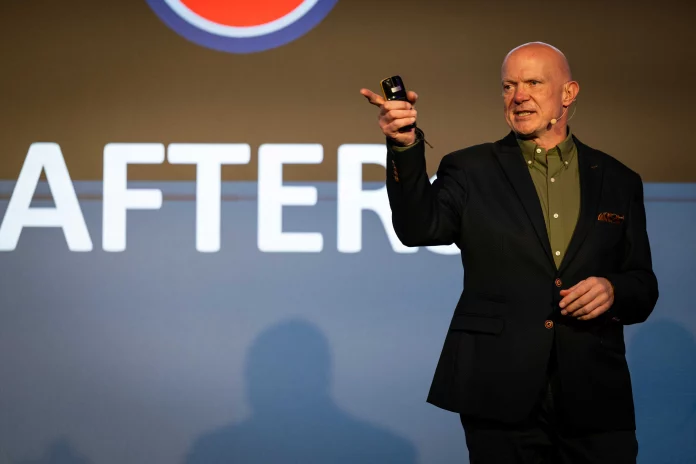
During his keynote at the National Sales Conference, Andy Bounds posed a simple question: “Have you ever been to a meeting that was absolutely rubbish?” The room erupted. Why? Because most sales presentations follow a predictable, soul-crushing pattern:
- Slide 1: “Our Credentials” (translation: “I’m going to talk about myself”).
- Slide 2: “Founded in 1922” (translation: “I’m going to tell you how old we are”).
- Slide 3: A map of office locations.
- Slide 4: Photos of the dead founders.
Andy’s first practical tip is blunt: Don’t do that. If your prospect only cares about exporting into Belgium, your first slide should be titled: “How we’ll help you export into Belgium”.
The ‘Afters’ Philosophy
Andy explains that there are two ways to describe your selling point. Most people focus on the Past and Present, their people, their service, and their expertise.
The elite 1%, however, focus on the Future. Andy calls this “The Afters“.
A lawyer shouldn’t sell “legal expertise”; they sell “keeping you out of jail”.
A personal trainer shouldn’t sell “gym equipment”; they sell “losing two pounds before Christmas”.
A toothpaste brand doesn’t sell “paste”; it sells “clean teeth” (or, as Andy joked, “finding love on a Friday night”).
The Rule: People don’t buy what you do. They buy where they are better off after you have done it.
Speak ‘Client,’ Not ‘Corporate’
When describing these “Afters,” Andy insists on two non-negotiable rules:
- Use Client Language: Avoid internal jargon. No client has ever woken up and said, “What I really need is a one-stop shop for all my needs”. Use the words your customers actually use.
- Go Further into the Future: Don’t stop at the immediate result. If you’re a financial advisor, don’t just say “you’ll understand finances better”. Go further: “You’ll make better decisions, which leads to a more secure retirement”.
The ‘Referral’ Accountability
One of the most practical takeaways from Andy’s session was his approach to referrals. Many reps “intend” to ask for referrals but “run out of time.” Andy’s solution? Accountability. He shared how he tasked his PA with asking him every Friday: “Have you asked for two referrals this week?”. When he failed, the target doubled for the following week.
So, if you want to win more work without doing more work, stop being an archivist of your company’s history. Start being the architect of your customer’s future.
Check out our other From the NSC Stage articles, including: