
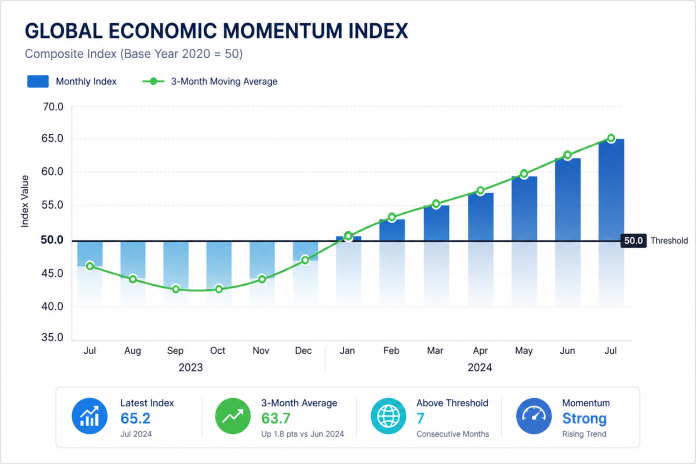
Global manufacturing output continued its solid expansion in July, backed by new orders and ongoing safety stock accumulation. However, according to the latest Global Manufacturing Purchasing Managers’ Index (PMI) survey compiled by S&P Global Market Intelligence and sponsored by J.P. Morgan, overall growth momentum cooled for a second consecutive month.
While production levels remain near five-year highs, softening input buying, reduced inventory accumulation, and persistent geopolitical friction are raising downside risks for the months ahead. Furthermore, business leaders are watching these trends closely as market dynamics shift.
Key Takeaways from July’s Data
Output Growth Softens: Worldwide factory production rose again, although the expansion rate slowed to its lowest since March. Consequently, despite the dip, current levels are broadly indicative of an annual global production rise of around 3%, which is well above the long-run 2% average.
Safety Stock Building Tempers: The push for precautionary buffer stocking, a major driver of recent output growth, began to ease. Therefore, input purchasing grew at its slowest pace this year as inventory levels stabilised.

Supply and Price Pressures Ease: Input cost inflation and supplier delays both moderated to multi-month lows. In fact, reports of raw material shortages constraining production dropped below the long-run average for the first time since last November.
Uncertainty Weighs on Sentiment: Business optimism remains severely muted. Specifically, concerns regarding US tariffs, ongoing conflicts in the Middle East and Ukraine, political shifts, and energy price volatility continue to dampen long-term demand.
Regional Performance and Market Dynamics
Growth varies significantly across different regions. For instance, certain developed economies are experiencing sharper drops in new orders, whereas emerging markets continue to demonstrate resilient factory demand. As a result, global supply chains must adjust to uneven recovery speeds.
In addition, operational expenses are coming under tighter control. Because material costs have stabilized, manufacturers are redirecting capital toward operational efficiency rather than stockpiling surplus materials.
Looking Ahead
Although supply chain bottlenecks and raw material shortages are posing less of an immediate threat than in previous quarters, manufacturing output expectations remain well below historical averages. With client order growth slowing for a third straight month, businesses are exercising caution over expansion plans. As a result, factory production faces potential headwinds heading into the final quarters of the year.