
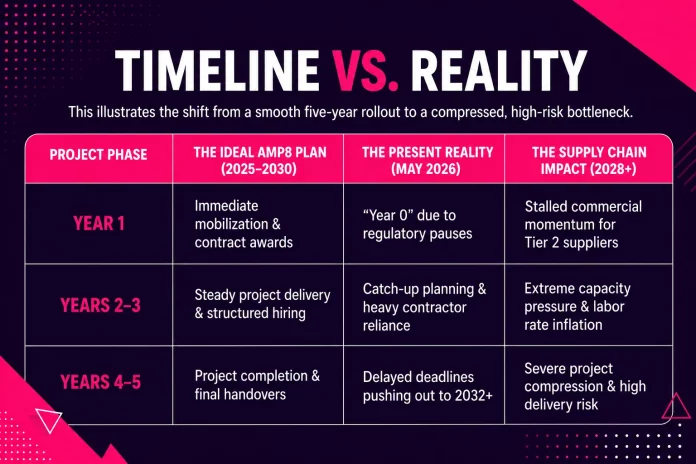
The UK water sector faces a critical delivery crisis. Specifically, stalled programmes and delayed regulatory decisions have pushed major infrastructure projects off track. This warning comes from specialist infrastructure recruiter Murray McIntosh. The firm cautions that the slow start to the £104 billion AMP8 asset management cycle threatens the wider engineering, construction, and manufacturing supply chains.
Consequently, what should have been year one of the investment cycle has effectively become “Year 0.” This lost momentum delays vital commercial contracts. Furthermore, it triggers a dangerous talent drain across the industrial sector.
Supply Chain Compression and Cost Inflation
Headline investment figures suggest progress across the utilities landscape. However, an overlap with legacy AMP7 projects currently masks genuine delays in new infrastructure deployment. Much of the sector remains trapped in the planning and mobilisation phase.
As a direct result, key project deadlines are already slipping. Targets originally set for 2030 now extend to 2032 and beyond. Ultimately, this delay creates a “perfect storm” for industrial suppliers.
Indeed, compressing this massive volume of work into a shorter timeframe places unsustainable pressure on Tier 1 and Tier 2 supply chains. Consequently, experts predict a severe spike in material cost inflation and project delivery risk over the next 24 months.
“The reality of the current AMP cycle is that AMP8 has not truly started yet,” warns Adam Cave, Founder and Managing Director at Murray McIntosh. “If mobilisation continues at this pace, we will see a significant build-up of work in the middle of the AMP. That brings supply chain pressure, rising costs, and increased delivery risk.”
The Talent Crisis: Reactive Human Capital Strategy
This operational bottleneck seriously impacts the UK labour market. Currently, engineering firms face a severe shortage of permanent technical talent. Therefore, companies increasingly rely on volatile contract hiring to patch immediate delivery gaps.
Alarmingly, businesses continue to plan in isolation despite the unprecedented scale of the £104 billion rollout. Moreover, the ongoing transition to a new regulatory body injects further uncertainty. This friction delays critical investment decisions regarding permanent staff.
Clearly, this reactive approach exposes a deep systemic flaw in UK infrastructure leadership. The water sector possesses the rare luxury of precise five-year demand forecasting. Yet, its human capital and procurement plans remain entirely reactive and under-resourced.
A Systemic Warning for Industrial Leaders
This utility bottleneck shares clear parallels with wider macro-economic trends. For instance, earlier this week The Growth Hub reported on the Government’s £470 million intervention to save foundational manufacturing from structural decline. That story highlighted a sector starved of capital. In contrast, the water industry possesses immense funding but remains completely paralysed by structural and regulatory inertia.
Ultimately, the decisions made over the next 12 months will determine whether AMP8 delivers its green infrastructure goals. To protect profit margins and secure capacity, manufacturing and engineering leaders must demand greater collaboration on workforce planning. Without a proactive shift, the UK supply chain risks buckling under intense operational pressure later in the cycle.