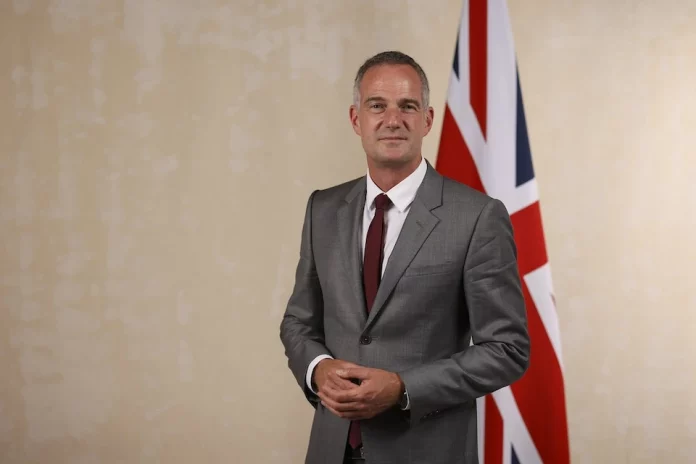
Speaking to a packed room at the Make UK National Manufacturing Conference, Business Secretary Peter Kyle sent a clear message: the UK is officially in a race for “industrial supremacy.”
However, before diving into domestic policy, Kyle addressed the elephant in the room. Specifically, he urged businesses with interests in the Middle East to register staff and follow Travel Advice closely amid ongoing regional tensions.
Despite these global challenges, Kyle’s primary focus remained on a “strategic imperative” to modernise UK manufacturing. Ultimately, he argues that the UK must shape the future of manufacturing, or be shaped by it.
Kyle said: “I was appointed to relentlessly pursue growth. To make sure government bets on the sectors that can win. And win big.”
The Resilience Strategy: Beyond the Shop Floor
Kyle reaffirmed the government’s commitment to the Industrial Strategy, promising to go “all in” for manufacturers. Notably, the government is doubling down on national resilience through resource security.
Specifically, the Secretary highlighted the Critical Minerals Strategy:
“It will ensure that we have a steady supply of the minerals that you need. Lithium for batteries. Copper and aluminium for heat pumps and wind turbines, too. All of that increases our national resilience,” said Kyle.
The Three Pillars of “Next Gen” Manufacturing
To stay competitive against the US, EU, and East Asia, Kyle outlined a three-part framework that every UK manufacturer needs to adopt:
1. Conception (The Digital Start)
The factory of the future no longer starts on the shop floor. Instead, it starts on a high-performance computer. Kyle pointed to the shift toward digital twins and advanced simulation. He said: “In the next generation economy, you and I know that value is increasingly captured at the design stage… The factory of the future begins not on the shop floor, but on a high-performance computer.”
2. Production (The Smart Factory)
Because global supply chains are evolving so fast, the UK is pushing the Made Smarter adoption program. Crucially, Kyle pledged £1 billion for sector skills packages, ensuring the workforce evolves alongside the tech.
“The engineer of the future must be as comfortable with AI as with machinery. They must be as fluent in data as in design,” said Kyle.
Utilisation (The Service Shift)
Interestingly, Kyle noted that 21st-century manufacturing is no longer just about hardware. Rather, it is about “Power by the Hour,” selling integrated solutions and data analytics.
He said: “Manufacturing in the 21st Century is not just about exporting goods. It is about exporting targeted solutions… That combination of advanced engineering and digital service provision is where the margins are won.”
The Growth Hub Verdict
Ultimately, the Business Secretary’s speech confirms that the “SME of the future” must be a tech company that happens to make things. Therefore, the focus for 2026 must be on upskilling and digital adoption. As Kyle put it: “The question is not whether this transformation in manufacturing will occur. It is whether Britain will shape it. Or be shaped by it.”