
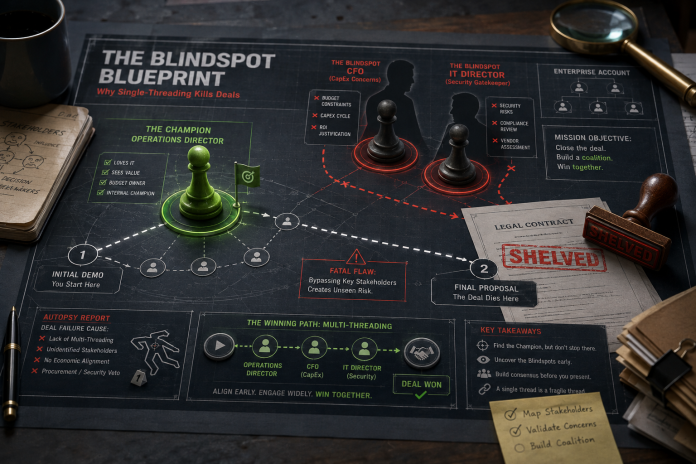
Why single-threaded deals can fail and how multi-threading protects your B2B sales pipeline.
The Case File: The Misaligned Enterprise Deal
The Prospect: A regional logistics and warehousing provider operating across three UK hubs.
The Deal Size: £180,000 per annum (SaaS + Custom Hardware Integration).
The Opportunity: Upgrading legacy warehouse management software to an AI-driven, real-time inventory tracking platform.
The Post-Mortem: What Went Wrong?
The commercial team spent four months cultivating a close relationship with the prospect’s Operations Director. Demonstrations went exceptionally well, technical validation was seamless, and the operations team was genuinely enthusiastic about the product.
Confident of a quick close, the account executive submitted a formal proposal in week 12. The Operations Director verbally confirmed they were “ready to move forward” and requested the final contract.
However, the moment the contract reached legal and procurement, the deal ground to a complete halt.
The Chief Financial Officer intervened, raising sharp objections over the upfront implementation costs and capital expenditure schedule. Simultaneously, the IT Director flagged security concerns regarding cloud integrations that had never been discussed during early technical calls.
Because the sales team had relied entirely on a single operational champion, they had completely missed the broader decision-making committee. The deal dragged on for another three months before being shelved indefinitely due to “shifting internal priorities.”
Key Takeaways for B2B Commercial Teams
Multi-Thread Every Opportunity: Never rely on a single internal champion, no matter how senior or enthusiastic they seem. Map out the entire buying committee early, identifying economic, technical, and executive stakeholders from day one.
Engage Finance Early with ROI Metrics: The CFO cares about risk mitigation, capital allocation, and pay-back periods. Deliver a clear business case and financial model directly to the economic buyer before sending final contracts.
Validate IT and Compliance Upfront: Technical hurdles should be uncovered and cleared during early discovery calls, rather than left as a surprise for legal review.